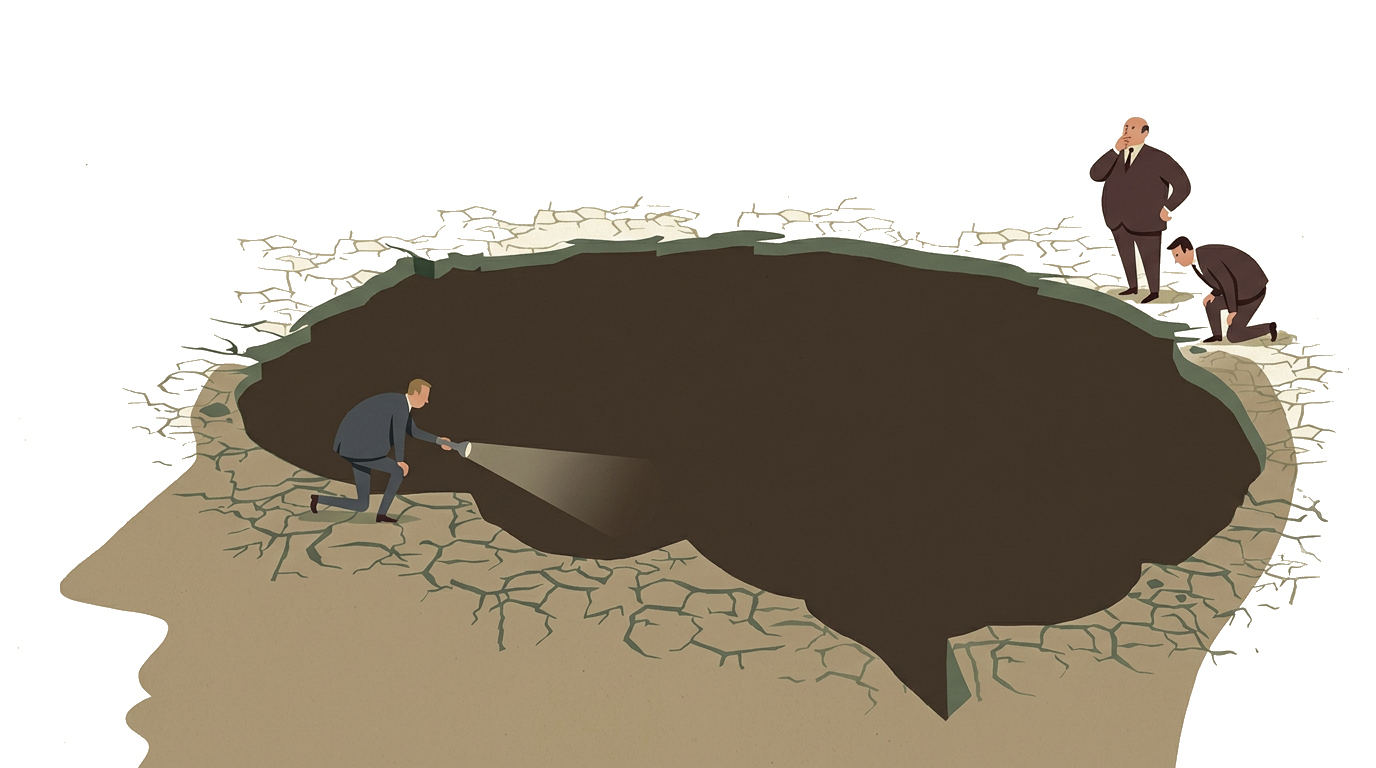
Organizations across both the commercial and government sectors are approaching a moment that, candidly, many leadership teams have not fully accounted for. For decades, critical business systems were built, customized, and maintained by a generation of IT professionals who deeply understood the technologies, frameworks, and configuration decisions behind them. These individuals often possess institutional knowledge that was never fully documented, because in practice it lived in their heads, in their experience, and in the informal decisions made along the way. Now, many of those same professionals are approaching retirement.
The consequence is not theoretical. It is operational.
When the architects and maintainers of legacy applications walk out the door, organizations are left with systems that still run critical business processes yet lack the people who understand how they were designed, how they interact with surrounding systems, or what trade-offs were made over time. These applications may continue operating for a period of time, but the ability to support them, enhance them, or troubleshoot them becomes progressively more difficult. In practical terms, the organization inherits technology risk that compounds every year.
This is particularly true for applications written on older frameworks, proprietary stacks, or heavily customized environments that are no longer common in the labor market. Recruiting talent capable of maintaining these systems becomes increasingly difficult, and even when the right individuals are found, the onboarding curve is steep because documentation rarely reflects the full reality of how the system behaves. In short, the organization becomes dependent on technology that fewer and fewer people know how to operate.
The question many CIOs are now asking is straightforward. How will these applications be supported in the future once the people who built them are no longer available?
Some organizations respond by attempting to preserve knowledge through documentation efforts or transitional staffing. Those efforts are useful, but they rarely solve the underlying structural problem. Documentation cannot fully capture the design intent, the operational quirks, or the decades of incremental changes that shaped the system. Nor does it solve the talent problem, which is that the number of engineers capable of supporting certain legacy technologies continues to decline.
For that reason, a growing number of CIOs are asking a more strategic question. Should we modernize these applications now, while our key resources are still available to guide the process?
From a risk management perspective, the answer is increasingly yes. When modernization occurs while the original experts are still present, organizations can capture critical architectural knowledge, clarify undocumented behaviors, and ensure that the modernization effort reflects the true intent of the system rather than simply reverse engineering it after the fact. That knowledge transfer materially reduces both technical risk and project cost.
There is also a second benefit that is often overlooked. Modernization is not only about replacing aging technology, but also about creating a consistent technology foundation across an organization’s application portfolio. Many enterprises today operate hundreds of legacy applications built across a wide range of frameworks, integration models, and deployment environments. Each one introduces unique maintenance requirements, unique failure points, and unique operational overhead. Over time, this fragmentation accumulates as technical debt, and it slows the organization’s ability to innovate because every change requires navigating a patchwork of incompatible systems.
A disciplined modernization program addresses that fragmentation directly. Applications are refactored, re-platformed, or in some cases re-architected so that they align with a consistent set of technologies and engineering practices. Integration layers move toward standardized REST or GraphQL APIs. Deployment models evolve toward CI/CD deployment packages. Infrastructure becomes predictable and repeatable. Reliability improves because the technology stack is no longer an assortment of one-off environments.
The outcome is not simply a more modern application. The outcome is a portfolio that behaves consistently, can be maintained by a broader talent pool, and enables the organization to innovate without constantly working around the limitations of legacy infrastructure. This is where the right partner can make a meaningful difference.
Modernization programs are often postponed because they appear large, expensive, or operationally disruptive. Leadership teams see hundreds of applications and assume the effort must be tackled all at once. In practice, that approach rarely works. What works instead is a structured roadmap that prioritizes applications based on risk, business value, and modernization complexity.
The process typically begins with a clear portfolio assessment. Which systems are most dependent on aging expertise. Which applications carry the highest operational risk. Which systems are constraining the organization’s ability to innovate or scale. Once those questions are answered, modernization can proceed in deliberate phases that steadily reduce technical debt while maintaining operational continuity.
This approach also produces early wins. As the first wave of applications is modernized, organizations begin to see measurable improvements in reliability, deployment velocity, and customer experience. Teams regain confidence in their technology environment, and the modernization roadmap becomes easier to sustain.
Ultimately, the objective is straightforward. Organizations want a technology portfolio that supports growth rather than constraining it. They want systems that can evolve with the business, integrate easily with new capabilities, and be supported by the next generation of engineers entering the workforce.
Looking ahead, the retirement of experienced IT professionals will continue to accelerate. That reality is already visible across many sectors, particularly in organizations that built large application portfolios during the 1990s and early 2000s. Waiting until those experts are gone makes modernization significantly harder. Acting while they are still available creates a very different outcome. If your organization is beginning to evaluate the future of its legacy applications, it may be useful to step back and assess where the real risks reside and how a structured modernization roadmap could address them. For organizations navigating that transition, Aspen helps portfolio owners reduce technical debt, improve consistency across their application environments, and create the reliability required to innovate and grow. If this challenge is on your radar, it would be worthwhile to schedule a conversation and explore the options together.
